
There are people around whom the word “impossible” begins to sound not like a final verdict, but rather like an invitation to test whether it really is.
The professional journey of photographer Irakli Shanidze began with exactly such a test — a bet over whether he could photograph the launch of a spacecraft despite having no credentials, special access, or obvious reason why he should be allowed to do so.
He did it.
It was the Space Shuttle Discovery.
The professional journey of photographer Irakli Shanidze began with exactly such a test — a bet over whether he could photograph the launch of a spacecraft despite having no credentials, special access, or obvious reason why he should be allowed to do so.
He did it.
It was the Space Shuttle Discovery.

And the photograph he took later, quite unexpectedly, travelled to the very same place where the spacecraft itself had gone only moments earlier — into orbit.
Today, Irakli Shanidze is a professional photographer, filmmaker, writer, and educator with a scientific background and decades of experience in photography. His biography includes international awards, commercial projects, exhibitions, collaborations with Leica, work connected with vision research, filmmaking, dance, and decades of sailing races.
Today, Irakli Shanidze is a professional photographer, filmmaker, writer, and educator with a scientific background and decades of experience in photography. His biography includes international awards, commercial projects, exhibitions, collaborations with Leica, work connected with vision research, filmmaking, dance, and decades of sailing races.
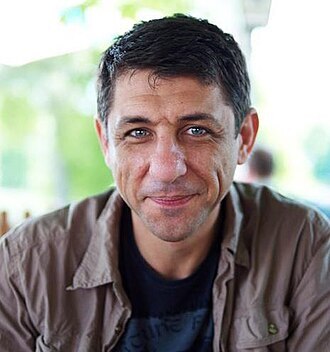
In 2026, he became a member of the jury of the international children’s competition Dream Car. And for our project, that is especially meaningful.
Because the competition is built around almost the same question that once launched Irakli’s own professional story:
What happens if you refuse to accept that something is impossible?
Because the competition is built around almost the same question that once launched Irakli’s own professional story:
What happens if you refuse to accept that something is impossible?
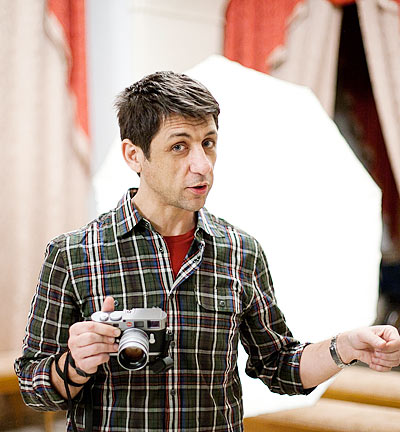
From Chemical Enzymology to Photography
Irakli Shanidze’s biography is nothing like the story of someone who followed a clearly mapped-out road toward becoming a photographer from childhood.
He was born in Tbilisi in 1968. He graduated from Moscow State University, where he studied chemical enzymology, moved to the United States in 1993, continued his education in Michigan, and graduated from the New York Institute of Photography. He began taking photographs at the age of twelve, when his grandfather gave him a Reflex Korelle camera. While studying at Moscow State University, he worked as a photojournalist for the university newspaper, and during his military service he worked as a military photo correspondent. In 2000, he opened a photography studio in Detroit, and in 2004 he became one of the founders of the International Academy of Photographic Arts.
Open biographical sources describe his photographic language as ironic and psychological, built on visual associations, allusions, paradoxes, and unusual technical methods. His work spans advertising, portraiture, and fine-art photography.
Irakli himself describes what he does much more briefly.
— Please tell us a little about yourself. What do you do?
“I take photographs, make films, write, stubbornly keep doing sports, and dance.”
There is actually quite a lot of his character in that answer. No long list of titles or achievements.
Simply — keep doing.
A Bet, Discovery, and a Photograph That Went Into Space
When asked how his professional career began, Irakli recalls a story that could easily become a film in its own right.
“It began rather unexpectedly — with a bet over whether I could photograph the launch of a spacecraft without having any grounds whatsoever for being there.”
An ordinary person would probably have started by finding out where to apply for accreditation, whom to write to, and all the reasons why they would certainly never be allowed in.
Shanidze chose another approach.
“I won the bet by photographing the launch of the Space Shuttle Discovery, using social engineering to gain access.”
But the story did not end there.
“The photograph ended up in orbit completely by chance — one of the witnesses to the bet was friends with an Israeli astronaut who was a member of the Discovery crew, and he sent the picture into space :-)”
It becomes an almost perfect metaphor for the rest of our conversation with Irakli.
First there is a task that looks unrealistic.
Then a way is found.
And sometimes the result travels even farther than the original goal.
Literally — into space.
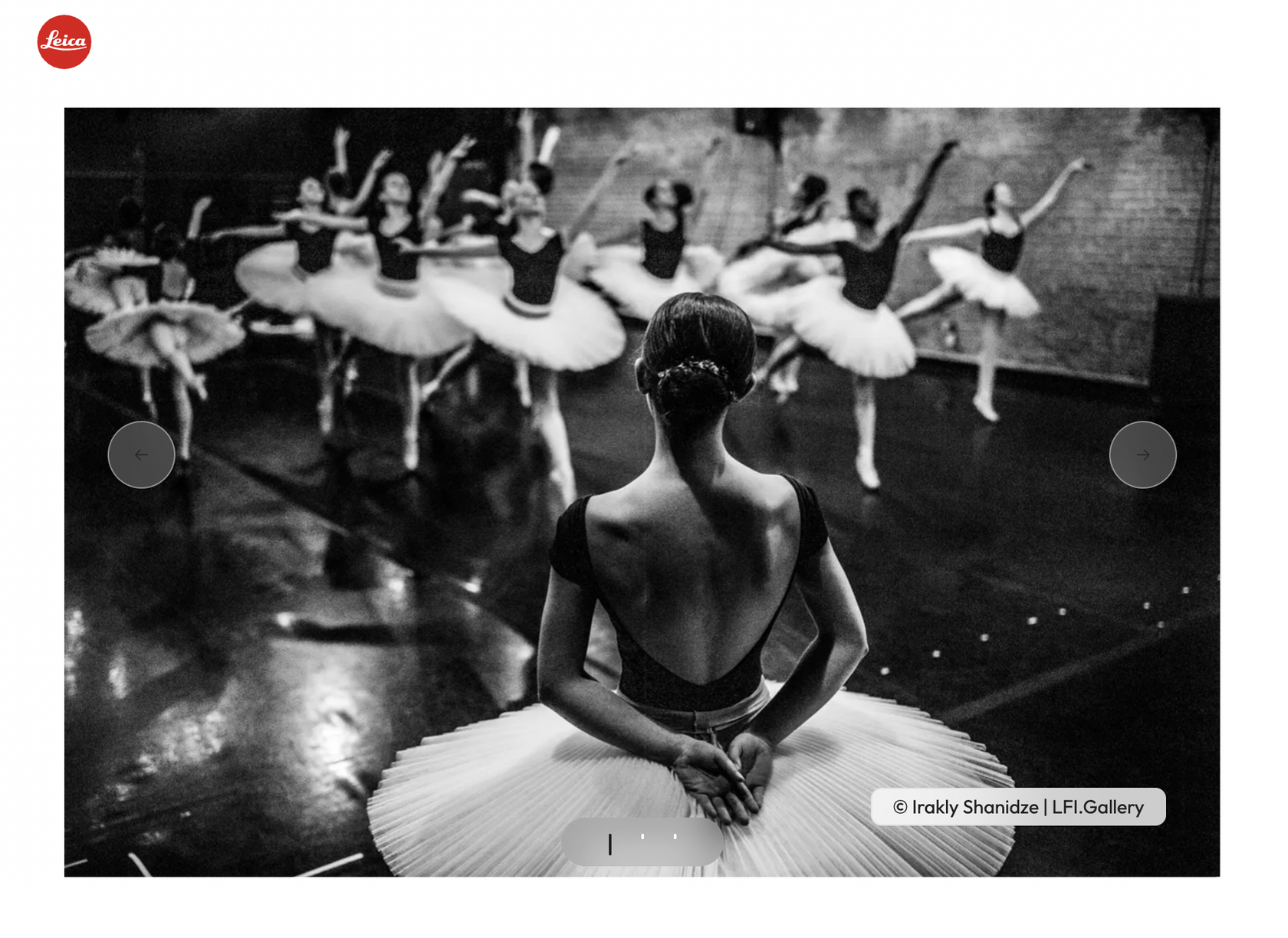
“So That the Soul Sings”
One can talk at length about craftsmanship, professional discipline, education, technique, and visual language.
But when we asked Irakli what mattered most to him in his work, his answer was strikingly brief:
“So that the soul sings.”
Perhaps this is one of the most precise answers to the question of why a person continues creating for decades.
Not for a flawless portfolio.
Not for the right professional status.
Not for yet another piece of work.
But for that moment of inner alignment, when what you are doing truly has meaning for you.
Awards — and Stories That Matter More Than Awards
Irakli Shanidze’s professional biography includes a number of international competitions and awards.
Among the most notable achievements listed in his biography are:
- Gold at the Trierenberg Super Circuit in the Portrait category;
- Gold, Professional Nomination, B&W Spider Awards;
- Gold, Russian Photographer of the Year 2007, in the Fine Art Photography category;
- First Prize, SPJ Excellence Award, Michigan Chapter.
His list of awards also includes Professional Nominations at the B&W Spider Awards in different years, wins in the Real Detroit Weekly readers’ poll, and a special prize in Sony’s international “Like.No.Other.” competition.
But what is interesting is that when asked which achievements he is personally most proud of, Irakli does not begin with medals.
He tells stories again.
And the next one is connected not with a spacecraft, but with Leica and Dmitry Medvedev.
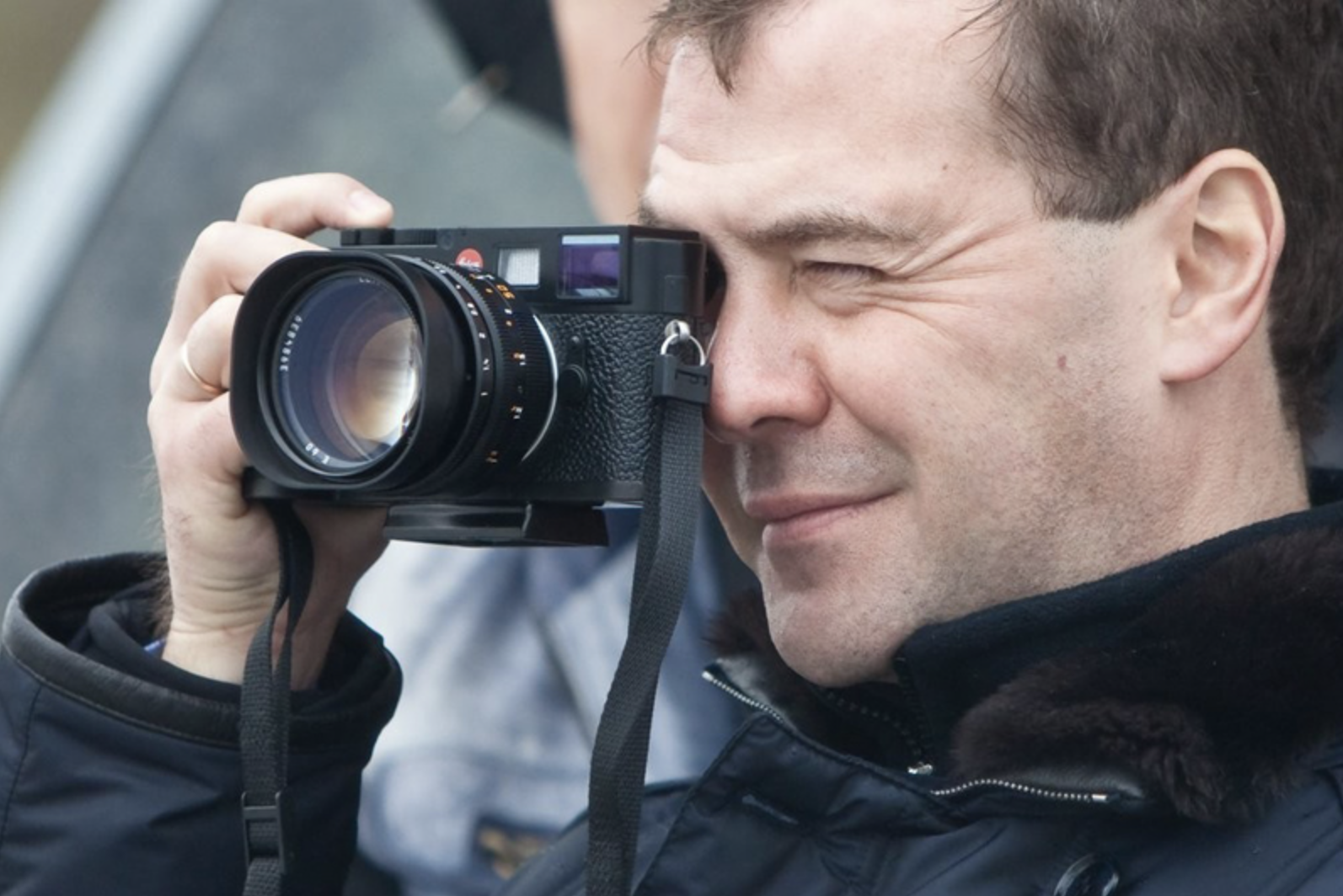
“Well, perhaps the only story more epic than the shuttle is how we managed to use Dmitry Medvedev to increase Leica’s brand recognition in Russia in 2010.”
The phrasing is very characteristic of Shanidze: brief, ironic, and almost provocative.
But behind it lies an important aspect of the photographer’s profession — the ability to see not only the image itself, but also how that image exists in the public sphere, how it works, how it spreads, and how it shapes the perception of a brand or a person.
The story is all the more interesting because in 2010 Dmitry Medvedev did indeed appear publicly with Leica cameras, including the Leica M9 and Leica S2; his interest in photography was widely discussed in the press at the time.
But when it comes not to spectacle, but to the social significance of his work, Irakli chooses an entirely different project.
Photography and the Possibility of Helping Someone See the World Differently
Among his professional projects, Irakli gives a special place to his work with the Smith-Kettlewell Eye Research Institute.
“In terms of social significance, I would say the project with the Smith-Kettlewell Eye Research Institute was the most important. Botox was invented there. They help blind people live full lives.”
Smith-Kettlewell is a research institute in San Francisco working, among other things, in the fields of vision, blindness, and support for people with visual impairments.
And here the scale of the conversation suddenly changes.
Up to this point, there had been a space shuttle, Leica, famous names, photography.
Now we are talking about the ability of professional knowledge to help make someone else’s everyday life fuller.
That is why completely different dimensions of the profession can easily coexist within a single biography.
An image can be a work of art.
It can be advertising.
It can be a provocation.
It can be part of a brand strategy.
Or it can become a tool connected with the real life of another person.
Anything Can Be a Source of Inspiration
Creative interviews often include a question to which an artist is almost expected to give a beautiful answer:
“What inspires you?”
Once again, Irakli refuses to offer a beautiful universal formula.
“It would be easier to ask what doesn’t inspire me. Anything can become a source of inspiration.”
Then comes an important detail:
“Associative chains appear suddenly and can be amazingly bizarre :)”
Perhaps it is precisely the ability to create such chains that distinguishes a creative way of seeing.
One object reminds you of another.
A random gesture triggers a memory.
The memory connects with an idea.
An object is given a function it has never had before.
Two things that previously existed independently of each other suddenly become part of the same story.
For an adult artist, this is a professional ability that has to be trained and protected.
For a child, it is almost a natural way of being.
Why Irakli Shanidze Agreed to Join the Dream Car Jury
This is where the conversation naturally turns to children.
We asked Irakli directly why he agreed to become a member of the project’s jury.
His answer can perhaps be considered one of the central ideas of the entire interview:
“Because most adults are children who have lost the ability to create. It is important to recognise talent early and not allow it to fade.”
This idea is especially close to the philosophy of Dream Car.
Our competition does not exist to test how correctly a child can construct perspective, draw a line, or depict a wheel.
Something else matters much more to us:
What did the child invent?
What did they see where an adult might notice nothing?
What did they connect?
What function did they give the car?
Why does it fly?
Why does it talk?
Why does it live underwater?
Why does it resemble an animal, a house, a cloud, or an entire city?
Sometimes a technically imperfect child’s drawing contains a far more interesting idea than a beautifully executed adult work.
One of the jury’s main tasks was precisely to recognise that idea.
“Children’s Imagination Has No Boundaries”
Irakli does not speak about children’s imagination as merely a charming feature of childhood.
For him, it is a genuine force.
“Children’s imagination has no boundaries. That is its strength — it overcomes the lack of knowledge, experience, and resources.”
An adult sees a lack of knowledge as a limitation.
A child often simply does not know that the limitation exists.
And because of this, a child may invent a solution that an adult would never reach precisely because the adult knows the rules too well.
“Imagination guides a child through life, and if it is not restricted but properly directed, the child will grow into a happy adult who has fulfilled themselves professionally.”
The phrase “properly directed” is particularly important here.
It does not mean simply leaving the child entirely to themselves.
Nor does it mean explaining as quickly as possible why their idea is impossible.
It means helping them preserve their imagination while gradually giving them the tools to bring their ideas into reality.
Being Surprised — or Looking with Interest?
We asked Irakli whether anything in the participants’ Dream Car entries surprised him.
His answer was unexpected:
“The many events I have experienced over almost six decades have taught me not to be surprised, but to look with interest at everything I see.”
This is a very professional observer’s position.
Not demanding an immediate “wow” effect from every new image.
Not looking for sensation.
Looking carefully.
Because sometimes what matters most is not found where things are loudest.
Talent Cannot Be Replaced by Praise
Irakli is also fairly strict when it comes to the competition entries themselves.
He does not try to turn a conversation about children’s creativity into obligatory praise for every drawing.
When asked whether there was one work he particularly remembered because of its idea, mood, or boldness, he replies:
“I can’t say there were masterpieces, but it would have been ridiculous to expect them from children of that age.”
This is an important clarification.
Respecting a child does not mean declaring everything they do brilliant.
Quite the opposite.
If we truly take children’s creativity seriously, then we should also be capable of seeing the difference between an ordinary drawing and the moment when something special appears within it.
“There were images that showed evidence of talent, and I marked them through my voting. As in any competition, there were only a few of them, and they clearly stood out from the rest.”
But what exactly was he looking for?
His answer was very precise:
“First and foremost — unstoppable imagination. Drawing technique can be acquired.”
Perhaps this is one of the best formulas for the Dream Car competition.
Technique can be learned.
But the ability to freely invent something that does not yet exist is much easier to lose than to regain.
Why Should a Child Imagine the Impossible?
There is a well-known saying: demand the impossible and you will get the best.
Irakli believes this principle is more relevant to adults.
“For children, there is no impossible. And some of them later grow into people who make the impossible possible.”
Today we live among things that once sounded fantastical.
Irakli gives a very personal example:
“As a child, I dreamed of a video telephone and an exercise bike that would not be boring to use while preparing for the spring racing season. And now — bam — all of it exists.”
Then he immediately expands the scale:
“But my dreams were modest compared with the dreams that turned into sails that harnessed the wind, into spacecraft, into medicines that save millions of people from death, into radio, cinema, the internet...”
In essence, the history of human culture and technology really does consist of an enormous number of things that once did not exist.
There was once no airplane.
No cinema.
No internet.
No video call.
No spacecraft.
There was only the idea that somehow, perhaps, these things ought to be possible.
And perhaps the greatest value of children’s imagination lies precisely in not yet knowing the complete list of reasons why something cannot be done.
A Child Does Not Calculate the Limitations
Shanidze sees this as a fundamental difference between an adult and a child’s view of the future.
“A child does not think about limitations. Any limitations — technical, financial, social.”
An adult looks at an incredible vehicle and immediately asks:
What kind of engine does it use?
How much does it cost?
Is it safe?
Is it legal?
What material is it made from?
Can it even move?
A child may begin somewhere else:
“I want it to be able to do this.”
And only afterwards does humanity have to figure out how exactly to make it happen.
“Children Even Lie Sincerely”
What does Irakli value most in children’s creativity?
We suggested several possibilities: imagination, sincerity, courage, humour, attention to detail.
Once again, he arranged the priorities in his own way.
“Sincerity is always present there; it is an inseparable part of children’s creativity. Children even lie sincerely 🙂”
And then he identifies what matters most:
“What I value above all is the courage of thought taking flight.”
And separately — humour.
“Humour is an important aspect. A sense of humour is an indicator of intelligence. The way a child jokes tells you how far they will go.”
This is also interesting in relation to Dream Car.
Children’s ideas are often serious and funny at the same time.
A car can save the planet while also serving ice cream.
It can fly into space and be friends with a cat.
It can run on solar energy and have enormous ears.
For adult logic, this is a contradiction.
For a child’s imagination, it is not.
When a Child’s Drawing Becomes Almost Real
One of the distinctive features of the Dream Car project is that our work does not end when we receive a drawing.
The child’s idea is given another form: using modern digital tools, we transform the drawing into a realistic image and try to imagine what the vehicle invented by the child might look like in our world.
We asked Irakli whether the use of modern technology contradicts the value of the original child’s drawing.
He replied:
“I see it positively. The technique used to realise an idea is secondary.”
And continued:
“If this were a competition in drawing skill, it would be different. The judging criteria would also be different.”
This distinction is fundamental.
We are not replacing the child’s idea with technology.
Technology is simply a tool.
The author of the original imagination is still the child.
The child decided that the car would have wings.
The child put a dinosaur inside it.
The child imagined wheels the size of a house.
Modern tools merely allow us, for a moment, to look into a reality in which that idea already exists.
What Do You Say to a Child Who Did Not Win?
Perhaps one of the strongest parts of the interview concerns losing.
This is the kind of question adults very often answer in the same way:
“Winning isn’t everything.”
“You still did a great job.”
“The important thing is that you tried.”
Irakli chooses a different position.
“Effort deserves praise, but effort alone is not enough.”
He does not suggest devaluing effort.
Instead, he suggests taking a child seriously enough to allow them to analyse their own result.
“I would ask the child why they did not win, why their effort was not enough. The child needs to understand for themselves how to win next time.”
Then comes a phrase worth setting apart:
“Next time is not consolation. It is a plan.”
And another:
“Losers always have an explanation. Winners always have a plan.”
One can argue with this.
But that is precisely what makes the idea interesting.
There is none of the usual adult condescension toward a child.
On the contrary — the child is given agency.
Look.
Think.
Analyse.
Try again.
Not because adults have promised that they will win next time, but because the next result can potentially be changed through their own actions.
And There Will Be No Universal Advice
After such an answer, it seemed natural to ask:
What advice would you give to young participants in future competitions?
Irakli declined.
“That is too general a question. I don’t like giving general advice :-)”
And perhaps that refusal should remain in the interview exactly as it is.
Because it continues the same thought.
There are no universal routes.
A universal phrase like “believe in yourself” does not solve anything.
A particular child needs a particular conversation about their particular work, their abilities, and their next step.
His Dream Car Turned Out Not to Be a Car
At the end, we decided to take Irakli back to his own childhood.
If you had entered Dream Car as a child yourself, what kind of car would you have drawn?
It turned out — none.
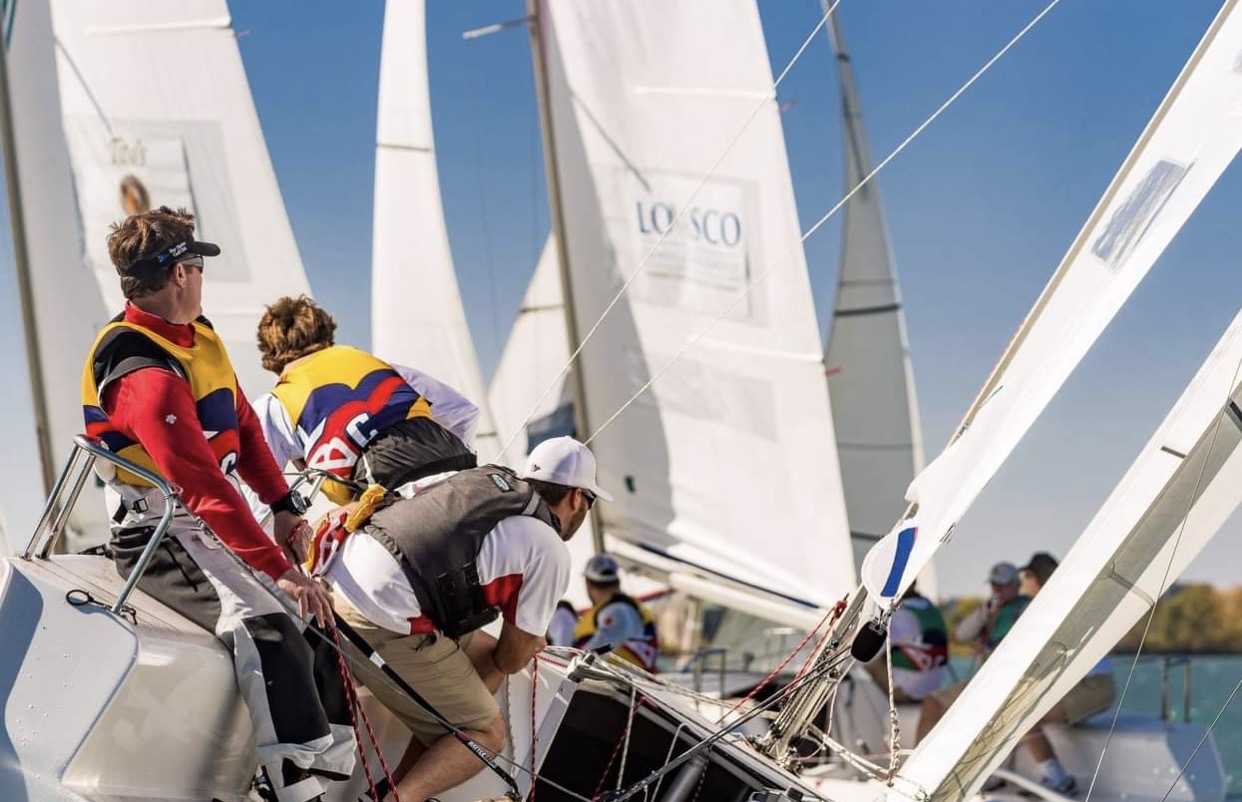
“It wouldn’t have been a car. It would have been a sailing boat.”
And here another connection appears between childhood imagination and adult life:
“And I have now been racing sailboats for 35 years.”
Then Irakli formulates perhaps the main principle of his own biography:
“My dreams come true because I actively work toward them.”
This is a very important addition.
Not simply:
dream — and the dream will come true.
But:
dream — and work in the direction of your dream.
Once there was a boy who dreamed of a sailing boat.
Decades later, that boy, now an adult, still takes part in sailing races.
Between those two points there is no miracle.
There are years of action.
Why Children from Different Countries Should Meet Within One Project
Dream Car was conceived as an international competition.
And it was important for us to ask Irakli whether it really matters that children who have never met one another and who have grown up in different cultures are brought together within one creative space.
To explain, he gives an unexpected analogy from science.
“Because this is how you avoid what scientists call ‘academic incest.’”
He continues:
“At the best American universities, and especially medical schools, there is a rule against accepting their own graduates into postgraduate programmes. Someone who graduated from another university arrives with an original set of knowledge and skills and brings them into a new ecosystem.”
Hence the conclusion:
“That is why cultural and scientific exchange is so important.”
The same can be said about children’s imagination.
A child from one country imagines the vehicle of the future in one way.
A child from another sees it completely differently.
And no one has to decide which version is “correct.”
The interest appears precisely at the moment when different ways of thinking meet.
Cultural exchange begins long before university.
Sometimes it begins with a single child’s drawing.
Art Does Not Need a Translator
The final question of the interview was almost philosophical:
Can art become a language that children understand without translation?
Irakli immediately challenged the premise of the question itself.
“What do you mean, ‘can become’? Art already is that language.”
Because at its foundation are not words.
“Art works with emotions, and emotions are universally understood.”
And his final statement is, once again, characteristically uncompromising:
“If a work of art requires translation, then there is reason to question whether it is not an impostor.”
One may disagree with this statement as well.
But it ends the conversation beautifully precisely because we hear a living person speaking, rather than a collection of safe interview talking points.
Do Not Explain to Children Too Early What Is Impossible
When we invited professionals to join the jury of Dream Car, it was important to us not simply to collect well-known names.
Far more important was finding people capable of taking a child’s idea seriously.
Not condescendingly.
Not according to the principle that “all children are talented.”
But attentively.
To recognise a strong idea.
To distinguish an unusual solution.
To notice genuine talent.
Irakli Shanidze proved to be exactly that kind of jury member.
And I am genuinely very proud that he agreed to become part of the Dream Car project.
Not only because he has a serious professional biography and international recognition behind him.
Not only because his awards include Gold at the Trierenberg Super Circuit, Professional Nomination at the B&W Spider Awards, the title of Russian Photographer of the Year 2007 in fine-art photography, and First Prize at the SPJ Excellence Award.
But because his own story intersects remarkably closely with what we are trying to tell children.
His professional journey began with a bet about something impossible — and led to a photograph of the Space Shuttle Discovery.
As a child, he dreamed about technologies that did not yet exist — and lived to see them become ordinary parts of everyday life.
He dreamed of a sailing boat — and has now spent 35 years racing sailboats.
And when looking at children’s entries, he was not searching for perfect pencil technique, but for unstoppable imagination.
Perhaps that is exactly where the main point of connection lies.
We are used to thinking that an adult must teach a child to understand reality.
But sometimes the adult’s role is completely different:
not to explain too early where the possible ends.
Because today’s impossible children’s car may remain only a drawing.
Or it may become the beginning of an idea.
And one day, some of the children who now calmly draw the impossible may indeed grow into the people who make it real.
As Irakli Shanidze said:
“For children, there is no impossible. And some of them later grow into people who make the impossible possible.”
This article was prepared on the basis of a written interview given by Irakli Shanidze specifically for the Dream Car project. Biographical information and details of his professional awards were supplemented from publicly available sources.